Geology
Rocks and minerals can be found in your own backyard. Explore the world around you and learn about the history of the formation of the Earth by studying geology. We've gathered resources to make it fun and interesting.
Things to See & Do in Maryland
Greenbelt Park
Greenbelt Park is a retreat from the pressures of city life and a refuge for native plants and animals just twelve miles from Washington, D.C. Long before colonial settlers appeared here, trees and flowers covered these rolling hills and wildlife roamed the woodlands. Algonquin Indians hunted this land in competition with other smaller tribes. A balance existed between the land and its plants, animals, and native people. Then the colonists arrived. Trees fell and forests gave way to farmland. Wildlife retreated to the frontier. For the next 150 years, people cleared the land, plowed the fields, and planted tobacco, corn, and other crops. The rich fertile soil returned high yields. The people did not give back to the land as much as they took. The land wore out, producing less each season and farming ceased. The land was left bare and defenseless. Erosion caused many scars before nature could slow the process with new growth. Since the early 1900's the land has been recovering.. Today the mixed pine and decidious forest testifies to the land's ability to recover.
Assateague Island National Seashore
Storm tossed seas, as well as gentle breezes shape Assateague Island. This barrier island is a tale of constant movement and change. Bands of wild horses freely roam amongst plants and native animals that have adapted to a life of sand, salt and wind. Special thickened leaves and odd shapes reveal the plant world’s successful struggle here. Ghost crabs buried in the cool beach sand and tree swallows plucking bayberries on their southward migration offer glimpses of the animal world’s connection to Assateague.
Appalachian National Scenic Trail
The Appalachian National Scenic Trail is a 2,180-mile footpath along the ridgecrests and across the major valleys of the Appalachian Mountains from Katahdin in Maine to Springer Mountain in northern Georgia. It traverses the scenic, wooded, pastoral, wild, and culturally resonant lands of the Appalachian Mountains. Conceived in 1921, it was built by private citizens and completed in 1937. The trail traverses Maine, New Hampshire, Vermont, Massachusetts, Connecticut, New York, New Jersey, Pennsylvania, Maryland, West Virginia, Virginia, Tennessee, North Carolina and Georgia.
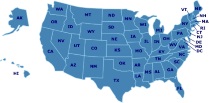
Looking for Another State?
Featured Resources
As an Amazon Associate, we earn from qualifying purchases. We get commissions for purchases made through links on this site.
Easy Grammar Systems
Easy Grammar Systems publishes the Easy Grammar and Daily Grams teaching texts for use through high school. Students use a “hands on” approach (deleting/marking) and learn correct usage and why that usage is appropriate. Review and using information previously learned to teach new concepts help to insure mastery learning. This method is both easy to teach and easy to learn.

National Geographic Guide to the National Parks of the United States, Fourth Edition
Now in its fourth edition, the National Geographic Field Guide to the Birds of North America is the ultimate birder’s field guide. Sturdy, portable, and easy-to-use, it features the most complete information available on every bird species known to North America. This revised edition features 250 completely updated range maps, new plumage and species classification information, specially commissioned full-color illustrations, and a superb new index that allows birders in the field to quickl...

Discovery of the Child
Maria Montessori went beyond the conventions of the day to seek a new way of knowing and loving a child. In THE DISCOVERY OF THE CHILD, she describes the nature of the child and her method of working more fully with the child's urge to learn. With 16 pages of photographs.

Designing Your Own Classical Curriculum: A Guide to Catholic Home Education
In this book, Laura Berquist offers a curriculum based on the philosophy of the classical Trivium: grammar, logic, and rhetoric. This valuable tools helps home educators craft a liberal arts curriculum that is good for both the soul and the intellect. The material in the book covers grades K-12 and has detailed and practical advice. There is also a section for a high school curriculum and a list of resources.

100+ New Jersey Drivers Licensing Exam Facts That You Need To Know: Quick Review for the Written Test
Prepare for the New Jersey's Driver's Written Exam. Know the 100+ important facts for the test. Be prepared to ace the exam!